
Signs your bathroom has a moisture problem
- The mirror stays fogged long after a shower
- Paint peeling or bubbling on the ceiling
- Mildew returning in grout and caulk joints
- A musty smell that does not go away
- Stains on the ceiling or around the fan grille
- A fan that is loud but barely pulls a tissue toward it
Any of these is worth raising during your consultation. They often point to a fan that is undersized, poorly ducted or simply not run long enough.
What Virginia's residential code requires
The Virginia Residential Code requires bathroom exhaust to discharge directly to the outdoors. It does not allow bathroom exhaust to be dumped into an attic, soffit, ridge vent or crawl space. For mechanical exhaust, the code sets a minimum capacity of 50 cfm for intermittent operation or 20 cfm for continuous operation. You can read the exhaust chapter of the code here: https://codes.iccsafe.org/content/VARC2021P1/chapter-15-exhaust-systems.
Those are minimums. A larger bathroom, a steam shower or a long duct run may call for more. What matters is the airflow actually delivered at the grille, which depends on the duct as much as the fan.
The duct is half the system
A good fan connected to a long, crushed or uninsulated duct performs like a bad fan. When we replace a fan during a remodel, we look at where the duct goes and where it exits. Short, straight runs with smooth duct and a proper exterior cap work best. In a cold attic, an uninsulated duct can collect condensation that drips back toward the fan.
In Ashburn, a new or relocated exterior vent cap can be visible from the street. If you live in a community with an HOA, it is worth checking whether a new exterior penetration needs approval.
Fan placement and controls
- Place the fan near the shower, where the moisture is produced.
- Make sure there is a path for replacement air, such as a gap under the door.
- Consider a humidity-sensing or timer control so the fan keeps running after the shower ends.
- Choose a quiet fan; people run quiet fans longer.
Moisture control behind the tile
Ventilation removes moisture from the air. Waterproofing keeps water out of the structure. Both matter. In showers and tub surrounds, Bathroom Brigade uses Schluter waterproofing systems such as Kerdi-Board and Kerdi-Shower kits so water that gets past the grout cannot reach the wall or subfloor.
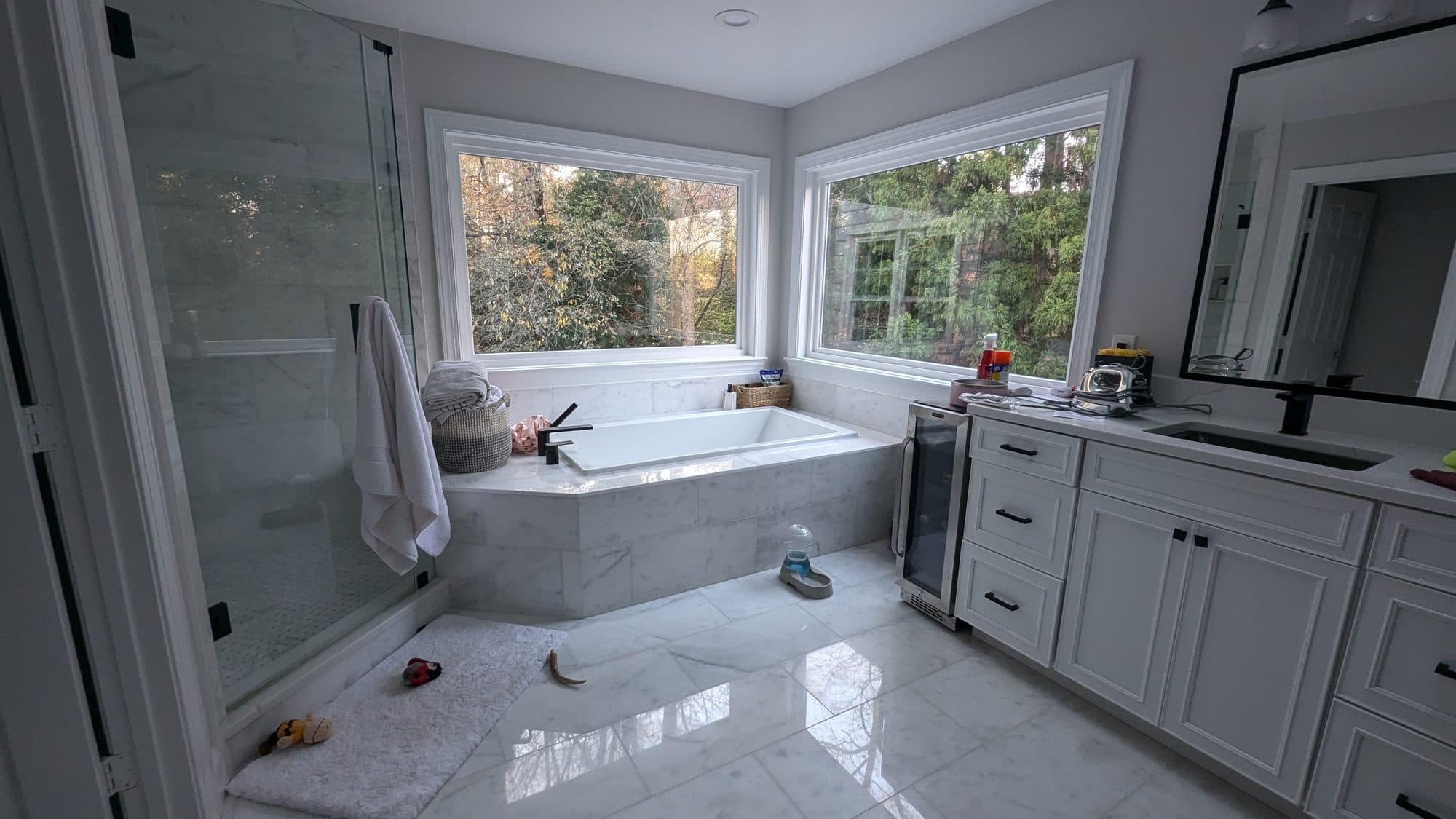
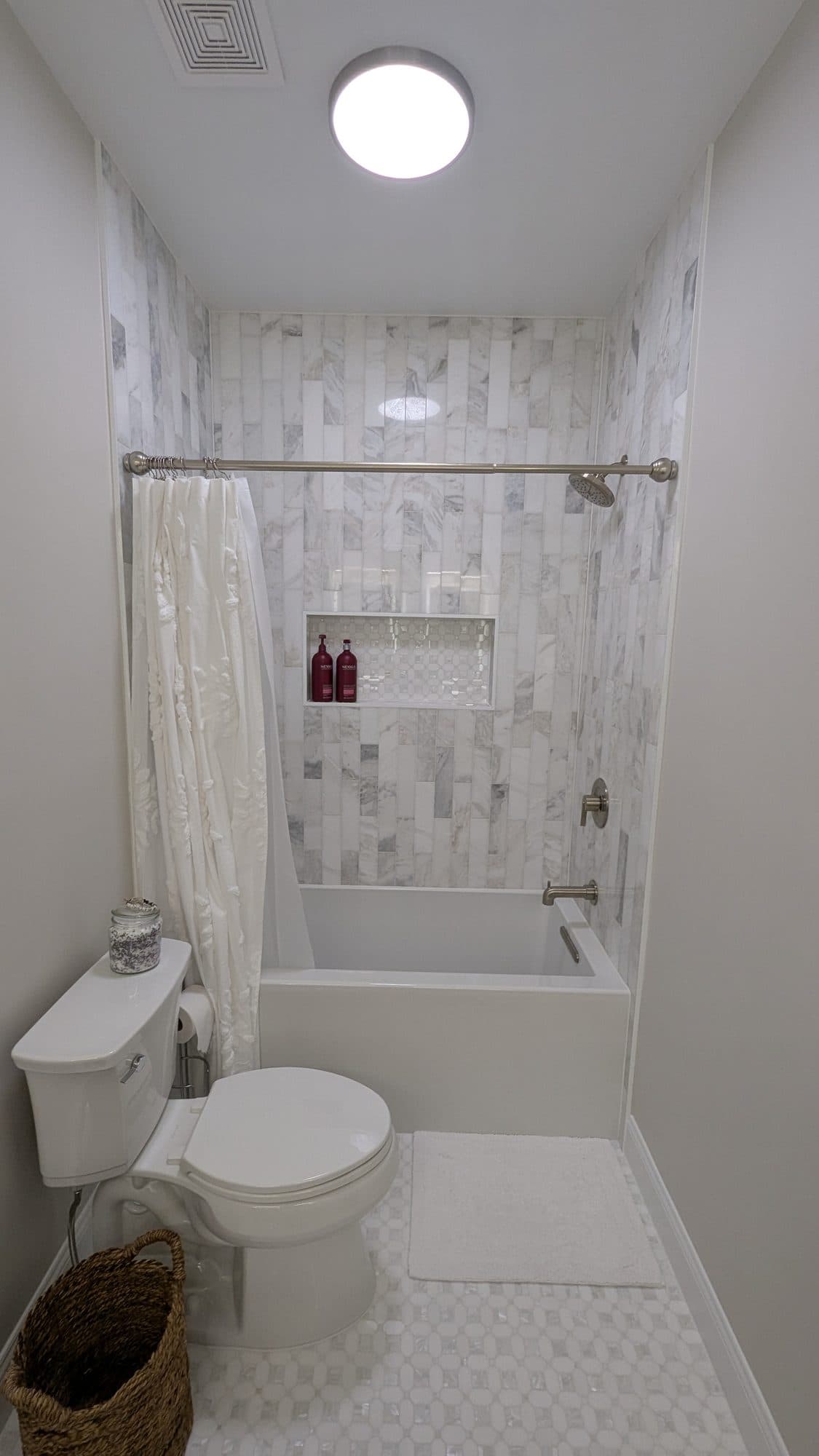
Left: a primary bathroom with a soaking tub and glass shower from a Reston project. Right: a tub and shower surround with a built-in niche from an Ashburn project.
Permits and inspections
A new or rerouted fan duct is mechanical work, and new wiring for the fan is electrical. Loudoun County lists mechanical and electrical among the residential trade permits for alterations, with rough-in and final inspections. We handle the work and coordinate the inspections.
What it costs
| Tier | Typical Scope | Range |
|---|---|---|
| Electrical & Lighting | Vanity lighting, exhaust fans, and code-compliant wiring for wet locations. | $1,500–$5,000 |
Typical Northern Virginia reference ranges from Bathroom Brigade's published cost guide. They are a starting point for planning, not a quote. Your written scope sets the actual price for your Ashburn bathroom.
A fan replacement with an existing good duct sits at the lower end. Rerouting a duct, adding a new exterior cap or upgrading controls adds to it.
Daily habits that help
- Turn the fan on before the shower starts, not after the room is full of steam.
- Leave it running after the shower until the mirror clears.
- Leave the shower door or curtain open afterward so the enclosure dries.
- Squeegee glass and tile walls in showers that see heavy daily use.
- Clean the fan grille occasionally; dust reduces airflow.
The best fan in the world does nothing when it is switched off. That is why controls matter: a humidity sensor or a timer means the fan keeps working after everyone has left the room.
Ventilation belongs in the written scope
When you compare estimates, look for the fan model or capacity, where the duct runs, where it exits the house and how the control works. If an estimate simply says replace exhaust fan, ask what happens to the duct.
Can my bathroom fan vent into the attic?▸
No. The Virginia Residential Code requires bathroom exhaust to discharge directly to the outdoors and does not allow it to discharge into an attic, soffit, ridge vent or crawl space.
How big should my bathroom fan be?▸
The code minimum is 50 cfm intermittent or 20 cfm continuous. Larger rooms and long duct runs often need more. We size the fan for your room and duct.
How long should the fan run after a shower?▸
Long enough for the mirror to clear and the room to dry. A timer or humidity-sensing control takes the guesswork out.
Will a new fan fix mildew?▸
It helps a lot, but existing mildew in grout and caulk should be cleaned or replaced, and any water getting behind the tile needs to be fixed.